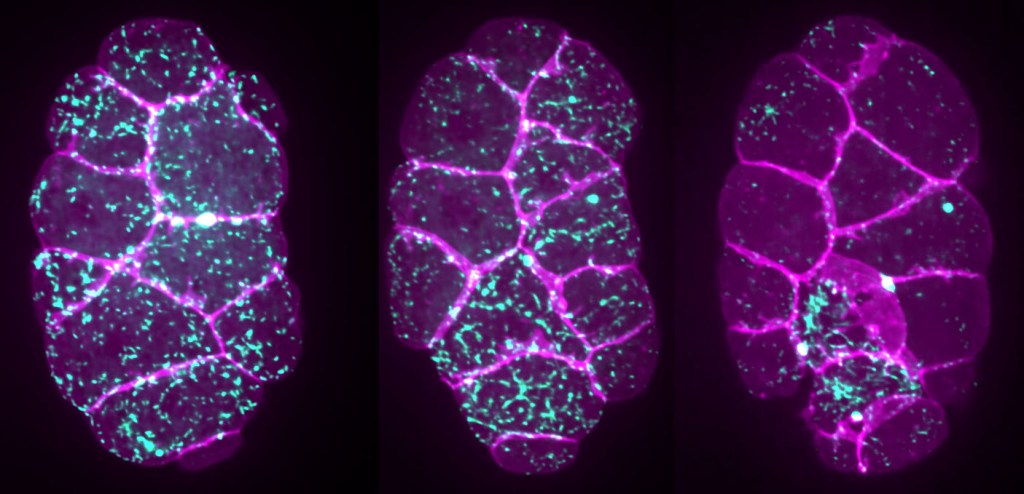
Investigating mechanisms that regulate a common morphogenetic process
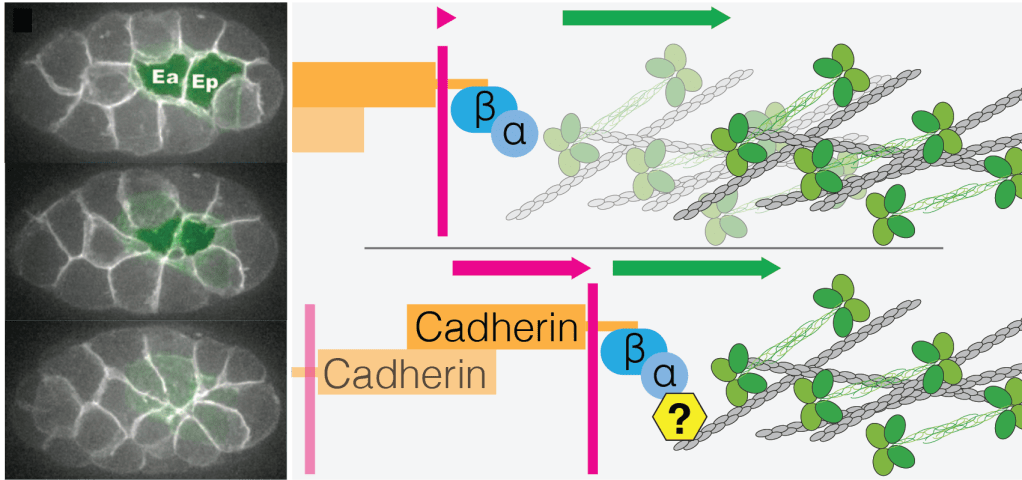
Gastrulation in C. elegans occurs via apical constriction, a conserved mechanism to change a cell’s shape and initiate morphogenesis in broad range of animal systems. C. elegans gastrulation begins with two endodermal precursor cells (E cells) that apically constrict and internalize. Apical constriction occurs as a result of actomyosin contractions at the apical surface, which pull on cell-cell junctions and shrink the exterior face of the cell. Surprisingly, data suggests that both actomyosin contractions and strong apical tension precede shrinking of the apical cell surface. This suggests that a temporally regulated link allows for the coordination of the contracting apical actomyosin networks with the apical cell-cell junctions to trigger apical constriction. We hypothesize that this link represents a protein that is produced, or activated, just before apical constriction begins and facilitates a connection between junctions and the cytoskeleton – which we call the molecular clutch mechanism. My current work uses proteomic and bioinformatic approaches to identify potential regulators of this mechanism.
Comparative approaches to identify regulators of cell morphogenesis and regeneration
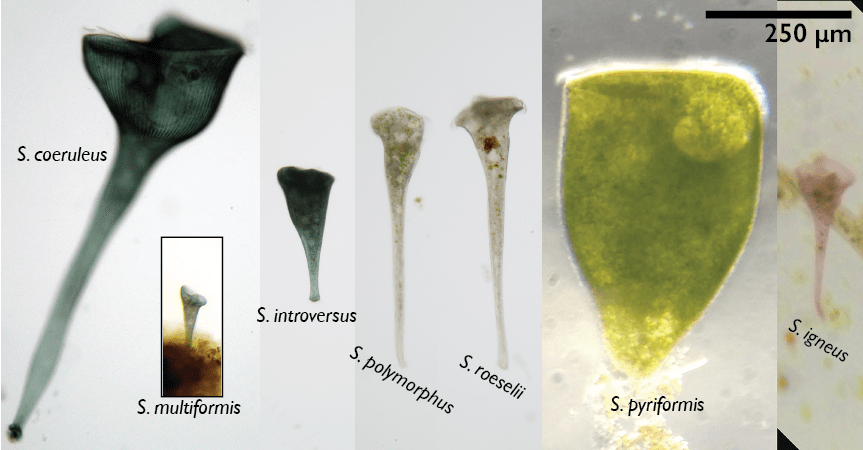
How cells generate complex morphologies and regenerate after injury is an important and unanswered question in biology. I use a diverse genus of ciliates known as Stentor to address these questions. Stentor are usually large, about 1 mm long, unicellular organisms with a trumpet shape. Most Stentor characterized also have the ability to regenerate, with amazing accuracy, any and all missing portions of their cell body after injury and microsurgical manipulations. Stentor coeruleus is a classical morphogenetic model system and has been developed as an emerging model system. In S. coeruleus, we have a sequenced genome and the ability to perform RNA interference to perturb gene function. We seek to leverage the phenomenal regenerative ability across the Stentor genus to identify the mechanisms that these cells use to generate their complex anatomy under normal conditions and regenerate after injury.
 Mark M. Slabodnick